The Ski Flex Sensor
There is a surprising dearth of "smart" technology in the world of ski racing. Athletes tend to religiously analyze film—of themselves and others—to examine form, turn shape, and other crucial but subtle factors that go into an aggressive and fast run down a mountain.
Apart from film and some relatively sophisticated timing equipment, however, ski teams—especially college ski teams—don't have much by way of data to analyze athlete's performance and optimize their skiing.
One small but important piece of racing that lends itself to data collection is ski flex. Racing skis, unlike their gentler recreational relatives, are brutal, sharp, unforgiving killing machines that will fling an unsuspecting skier down the hill at terrifying speed. They're also incredibly stiff, which means that you really have to work to get them to turn—you need to stand on your outside ski and force the edge into the ice on the mountain so that it bends along the circumference of your ski turn:
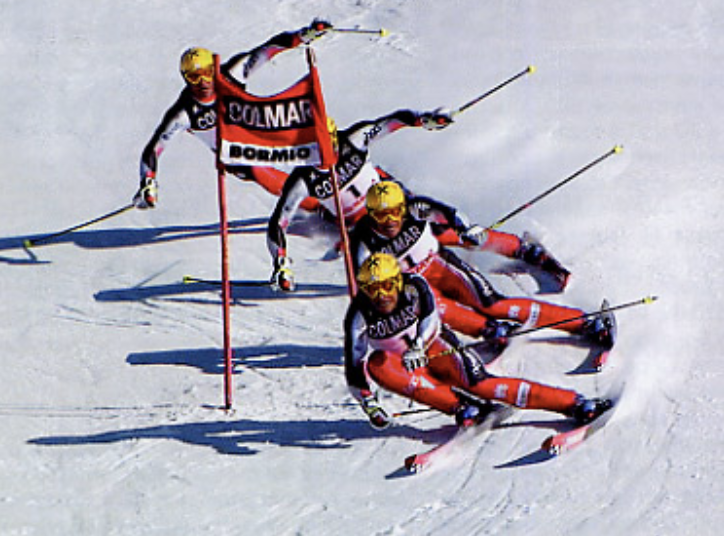
The default shape of a racing ski, viewed from the side, looks like the beginnings of a twirled mustache:

When you're ripping an arc on some east coast hardpack, however, the pressure from your leg onto the middle of the ski (where it rises in the photo above) bends the ski into a continous banana-like shape. Because racing skis are so stiff, this takes a ton of pressure. It also means that as soon as you remove that pressure, the ski springs back to its original shape. As a racer comes out of a turn and begins to shift up and out of the stance you see above, the ski rebounds out of the banana shape back to its default state. If you time it right, this rebound will help push you out across the fall line and set you up with a burst of acceleration for the next turn. It's a small boost, but in a sport where a few hundredths of a second can mean the difference between a podium or a nodium (no-podium), small boosts make or break your race.
Relying on what you can tell about your skiing and the timing of your turns from film—even in slomo—is clunky. There's only so much you can see from a DSLR camera videoing you from three hundred feet away down the mountain. Often, snow and ice chunks that you spray as you shred down the hill will obscure your skis and make it difficult to see exactly what's happening. If you're turning early and coming out of a turn further uphill from the next gate than you need to be, your wasting your acceleration out of the turn. If you turn late, your next turn will have to cut further across the hill than necessary to make it to the next gate, wasting timein the process.
My plan is to design some sort of flex sensor that can be mounted on a pair of skis and used to track the flexion of a ski over the course of a run. If you can plot that flex data vs time, so that you can see a cool periodic path of your ski flex and analyze the symmetry of your turns—are you applying even pressure on "left footers" (turns where you stand on your left ski and rip over to the right) and "right footers" (vice versa)? Are you putting similar amounts of work into each turn?
If you can take this one step further and align the plot with the film of your run, you can identify where in a turn your ski is flexing to what degree, and ideally determine if you're maximizing the effects of the ski rebound on your turn exit.
Measuring Flex:
There are a few different options for measuring flex, the most obvious/famous of which is this bad boy, allegedly used in the Nintendo Power Glove (which was a disaster). These sorts of sensors are variable resistors, the resistance of which changes when the sensor is flexed. I believe they're made with conductive ink. The problem with these sensors is that they're not very long, and wouldn't give me meaningful information about the flex of a ski.
Instead, I'm planning on using a strain gauge.
The Strain Gauge:
Key to starting this project and to moving forward with the design is understanding the strain gauge and how to use it.
Here are a few foundational documents on the strain gauge:
- Installation: the installation of the gauge is critical to the success of the project; the gauge has to be fully bonded to the surface it measures (which presents a pretty big problem, since racers presumably don't want a permanent fixture on their ski. I might have to temporarily sacrifice a pair of my own for this project)
- The Wheatstone Bridge Circuit: this is the lifeblood of measuring strain. I need to spend some more time understanding this before I can move forward with developing a board and programming it to make something out of the data from the gauge…
- This is a pretty useful looking crash-course into to strain gauges!
And here it is. Just got it last week, and haven't had the chance to take it for a spin yet. This is the photo off amazon (it's really small, and I'm not sure if it'll work for a ski yet):
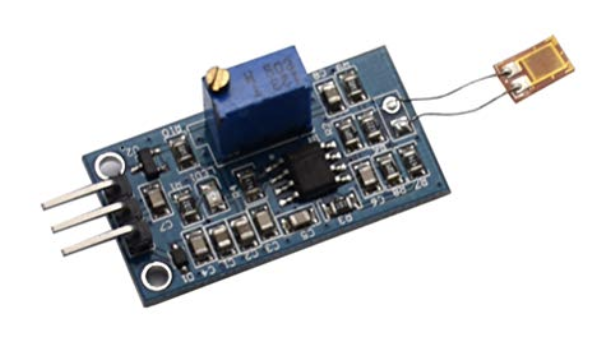
A big first step, before I mill anything or start figuring out circuitry, is just connecting the gauge to power and to an oscilloscope to see just how sensitive it is. I tried this for the first time this week, so I could play with the gauge before it gets epoxyed to any material and so I could get a sense for what I was dealing with...

As you can see from this photo the gauge is broken. I flicked it to try to get it to do something on the oscilloscope and snapped it off. Mea culpa!
I ordered a bunch more of the pads on Amazon, and as soon as I get those wired up I'm going to start with epoxying the gauge to something and then try flexing the material, so that I can actually see it in use and I'm not just battering the sensor about uselessly!
For right now, I'm working with a flex sensor epoxied to the ski and then attached to a circuitboard that in turn connects to a computer via FTDI. The analog output from the strain gauge amplifier is sent to a pin on the second board's microcontroller, and then sent to my laptop. Eventually, so that I don't have to connect a ski to my computer every time I want to see it flex, I need to get the strain gauge board to write to an SD card, and then put the SD card into my computer and do something with that data.
SD Card Questions
There are a few questions I have about how to do that.
- what should the data that gets written to the SD card look like?
- should I design the interface differently on the computer, because it isn't reading from FTDI but rather just from data on an SD card? My original plan was to have an interface that looks pretty similar to the viewing window on an oscilloscope—as the ski flexes repeatedly, a chart is created plotting flex vs time, which is really just voltage vs time.
Here is my incredibly simple board to get the analog information from the strain gauge:
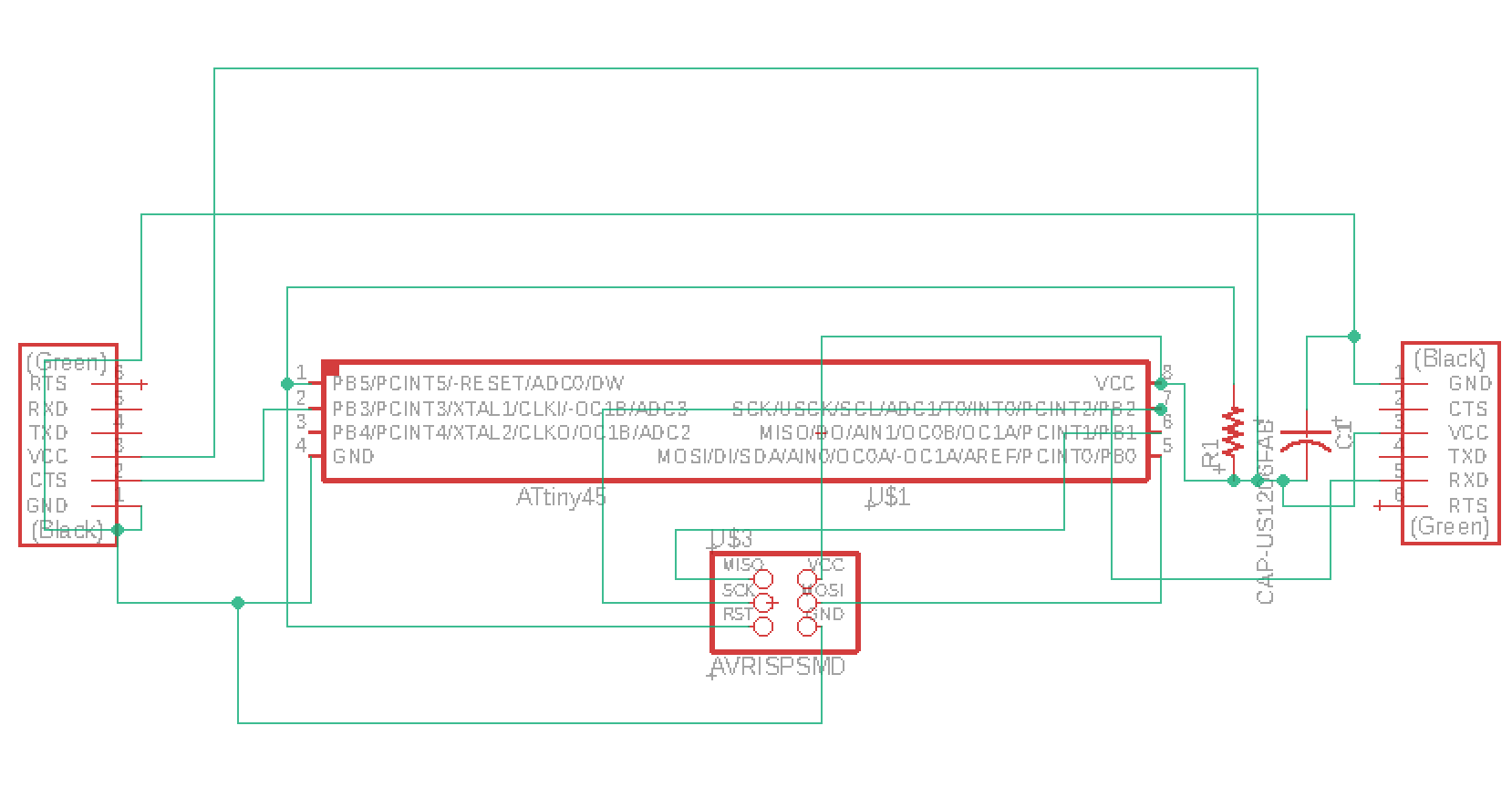
The "FTDI" part on the left is actually just a 3 pin (Ground, output, VCC) header to recieve information from the strain gauge. I photoshopped out the other 3 pins:
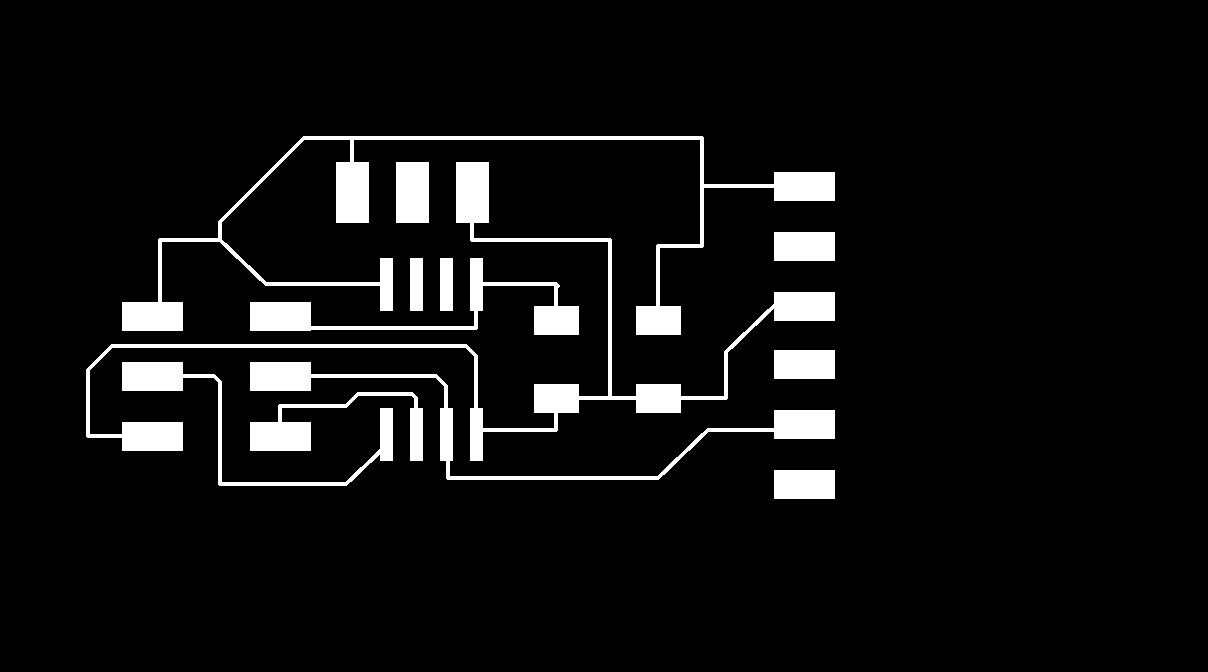
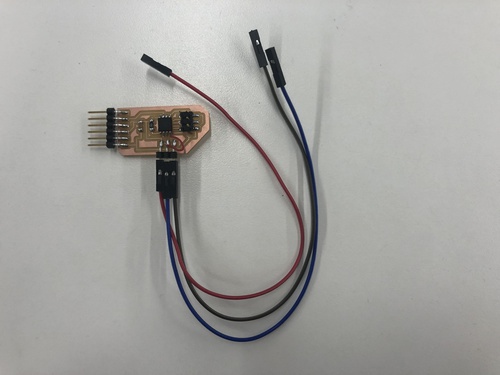
Here it is all soldered and ready to go. I stupidly forgot to connect a trace between the output pin from the strain board to a pin on the microcontroller, so you can see the shoddily soldered little red wire where I corrected that mistake.
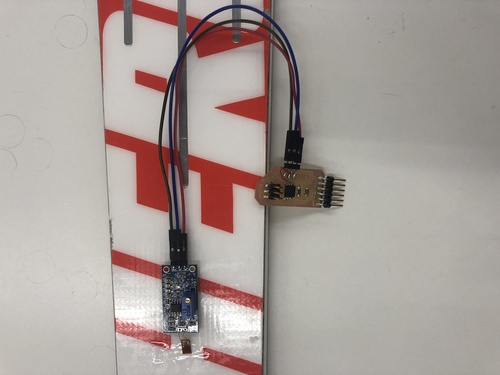
Here's my board connected to the strain gauge board, which is connected to the strain gauge. The gauge is epoxied onto a Rossignol FIS slalom ski (a ruthless piece of French engineering), which I'm using to test the gauge. It's incredibly stiff, and because the slalom event involves lots of quick, sharp turns its perfect for testing lots of flex. I was nervous that the strain gauge was going to be too sensitive and would "max out" before the ski had reached full flex, but I mounted it just in front of the binding on the ski (where it flexes the least) and after putting a fair a mount of pressure on it I think that it should hold up.
I met with some of the skiers on the team, and they mentioned that in addition to seeing flex over the course of a race they'd also like to be able to compare the flexes of various skis—when switching to a newer generation of ski or to a different ski company, it's important to take stiffness into consideration but incredibly difficult to detect differences in stiffness by hand or by eye. Another possible utility for a flex sensor, then, would be to have a mount for a ski that allows someone to step on it and flex a ski as far as it will go, measure the voltage change, and then do the same thing with another pair of skis. The difficulty: for strain gauges to work, they have to basically become part of the object they're measuring. This involves thoroughly cleaning the surface of the ski, sanding it with a high grit paper to rough up the surface and improve adhesion, and then applying an extremely strong epoxy (I've been using super quick curing stuff just to test things out, but for the final thing I'd need something a lot stronger) to keep it in place. In other words, you'd need a different strain gauge attached to every ski you were testing, which isn't ideal. I'll have to see if there's a way to make a modular attachment that can temporarily be affixed to any sort of ski to measure flex, but I don't know how effective that would be.