For full documentation, please refer to our site designated to the Ouja Board
Machine Week — Haunted Ouija Table
For Machine Week, our architecture group wanted something that felt playful and theatrical, but still demanded real machine integration: motion control, hidden mechanisms, tolerances, and a clean user experience. After some chaotic ideation (robotic tufter, cocktail mixer, etc.), we landed on the Ouija board: a “haunted” spirit board that appears to answer questions on its own… while hiding the entire mechanism inside a custom-built table. Its legacy was rooted in the mechanical turks of the 18th century.
Project Idea
The user interacts with a square Ouija board set into a designed table. You ask a question, place your hands near the planchette, and the cursor glides toward letters/numbers as if guided by an unseen presence. The intent was “effortless haunted object”: the surface looks clean and graphic, the motion feels smooth, and the engineering disappears.
We originally imagined additional stage effects (like candles that tip over on certain questions), but we kept refining scope as the machine came together.
Responsibilities
Avi organized us into sub-teams and assigned captains to coordinate dependencies. I ended up straddling multiple teams because the board had to interface cleanly with both the table + gantry + cursor/end effector. I started as “Board lead,” but quickly expanded into integration work:
- Board team: graphics pipeline, manufacturable vector cleanup, and acrylic etch + paint process.
- End effector / cursor integration: early ideation, magnet strategy, and constraints that fed back into board material + thickness decisions.
- Table / carpentry integration: interface sketching (how the board sits, openings, gantry clearances), plus hands-on help prepping lumber + assembly support.
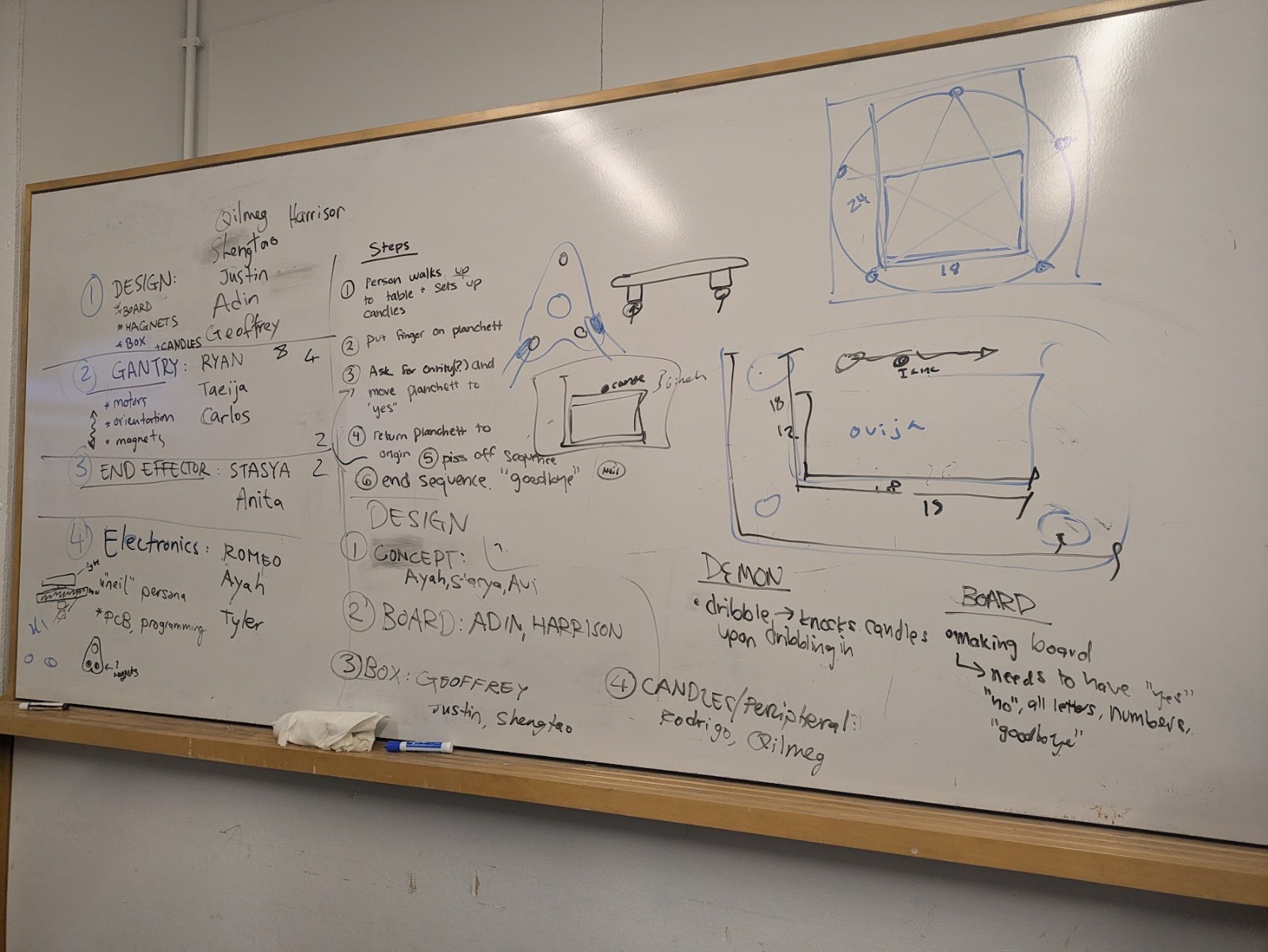
Early team brainstorm: quick votes, fast scope decisions, lots of interface dependencies.
End Effector Team
Design Process
The end effector needed to pull the planchette (cursor) from below the board using magnetic coupling. The core questions were:
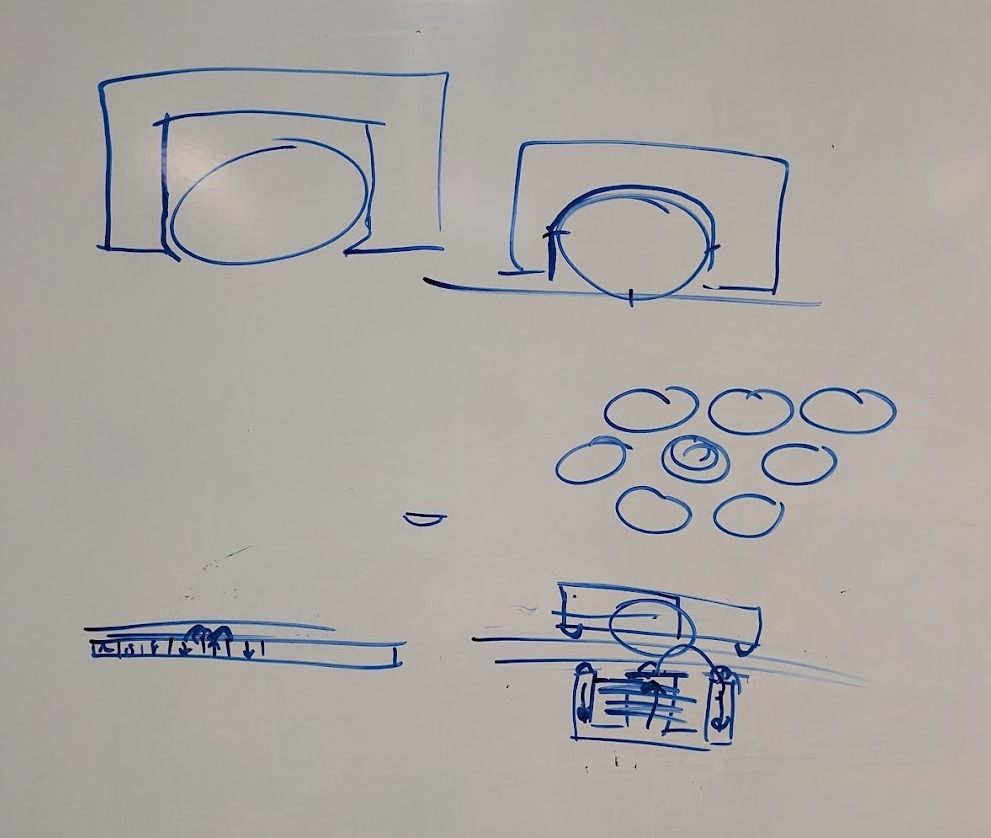
- Electromagnet vs permanent magnet?
- How strong does it need to be through the board material?
- How do we prevent the cursor from rotating (extra degree of freedom)?
- How do we mount it cleanly on the gantry carriage?
BOARD TEAM
Board Ideation
A Ouija board is basically theatrical graphic design pretending to be a board game. The mood needed to be dialed all the way up: ornate, occult, dramatic — but still refined enough to feel intentional rather than parody. To set the baseline, we ordered the cheapest “Spirit Board” Amazon could ship and used it as a reference for scale, atmosphere, and kitsch factor.

Reference board: fast calibration for scale, vibe, and layout.
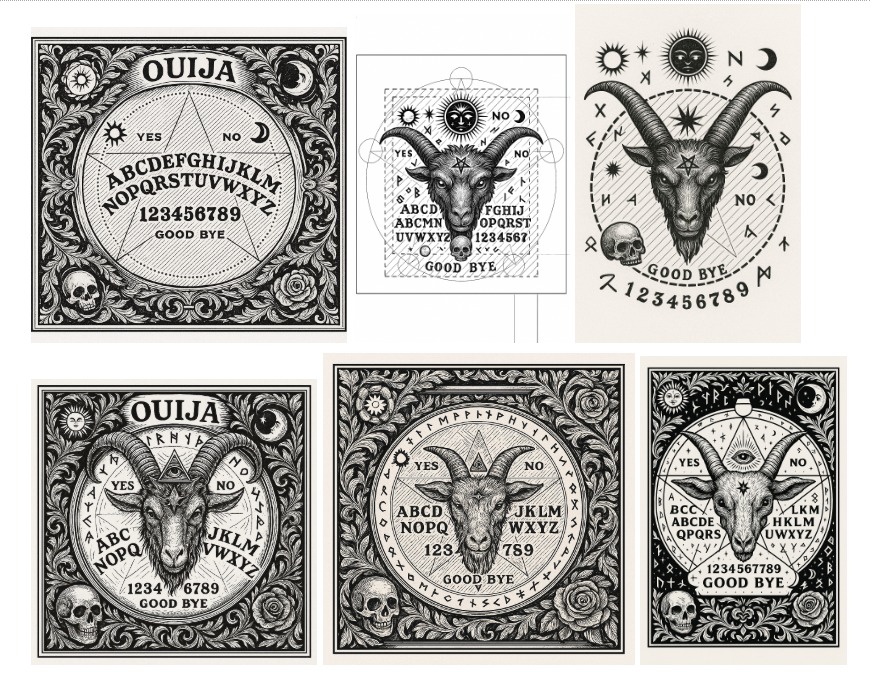
Our board needed to be perfectly square to integrate with the custom table. To iterate quickly, we used ChatGPT to generate initial motifs and compositions and then refined them toward our needs. Full prompt conversation: Ouija Board Concept Prompts (ChatGPT share).
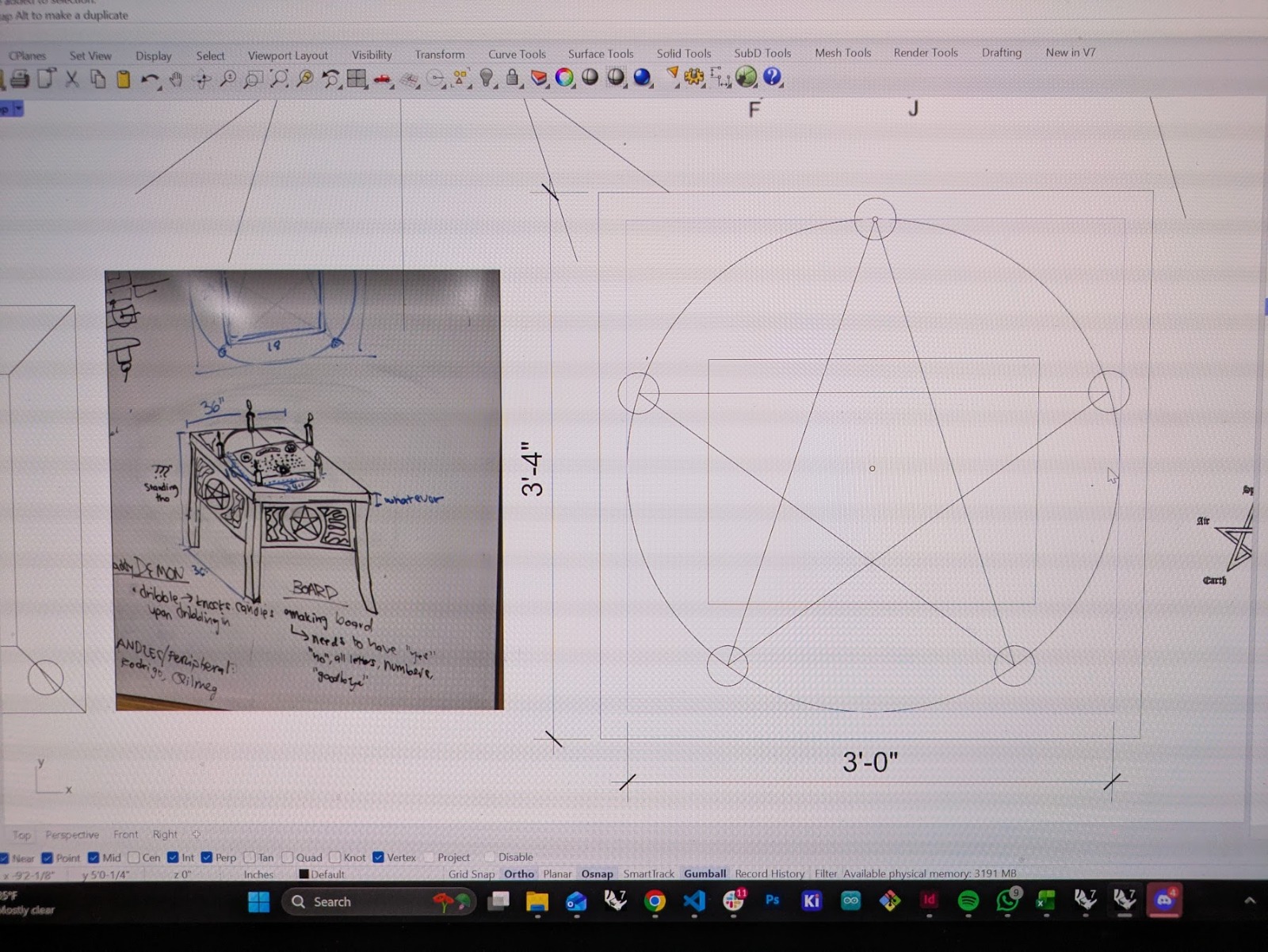
We also had a hard constraint: the gantry could not reach all the way to the edges. That meant text + motifs needed to be offset inward so the planchette could reliably hit targets.
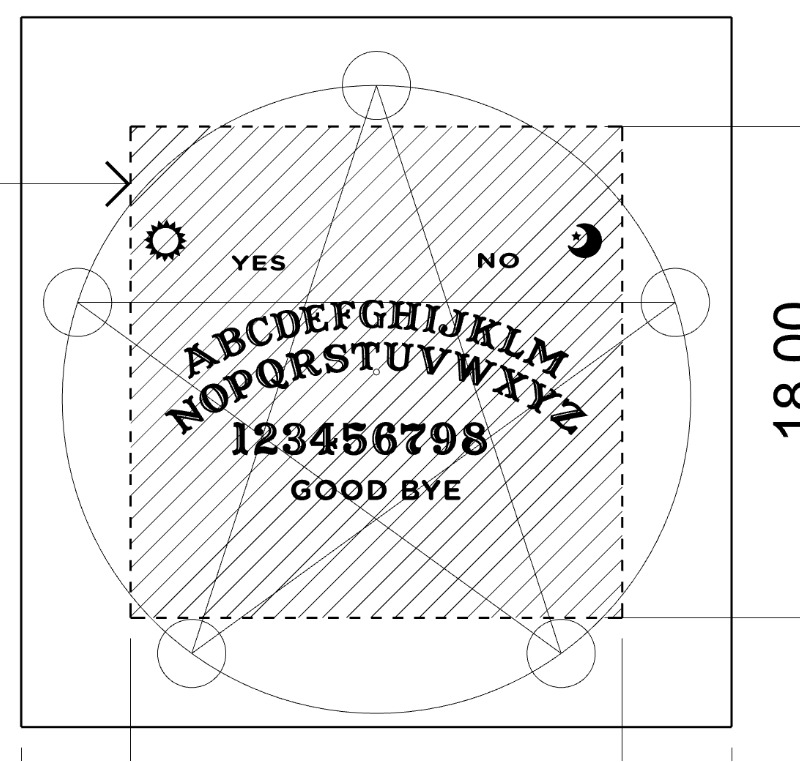
Early Rhino composition: square format + reachable layout constraints.
Symbolism and Graphic Development
We wanted extra layers of imagery — celestial icons, runes, skulls, filigree — but also wanted to avoid accidentally using loaded or culturally insensitive symbols. (Researching occult symbolism online is… a lot of double-checking.)
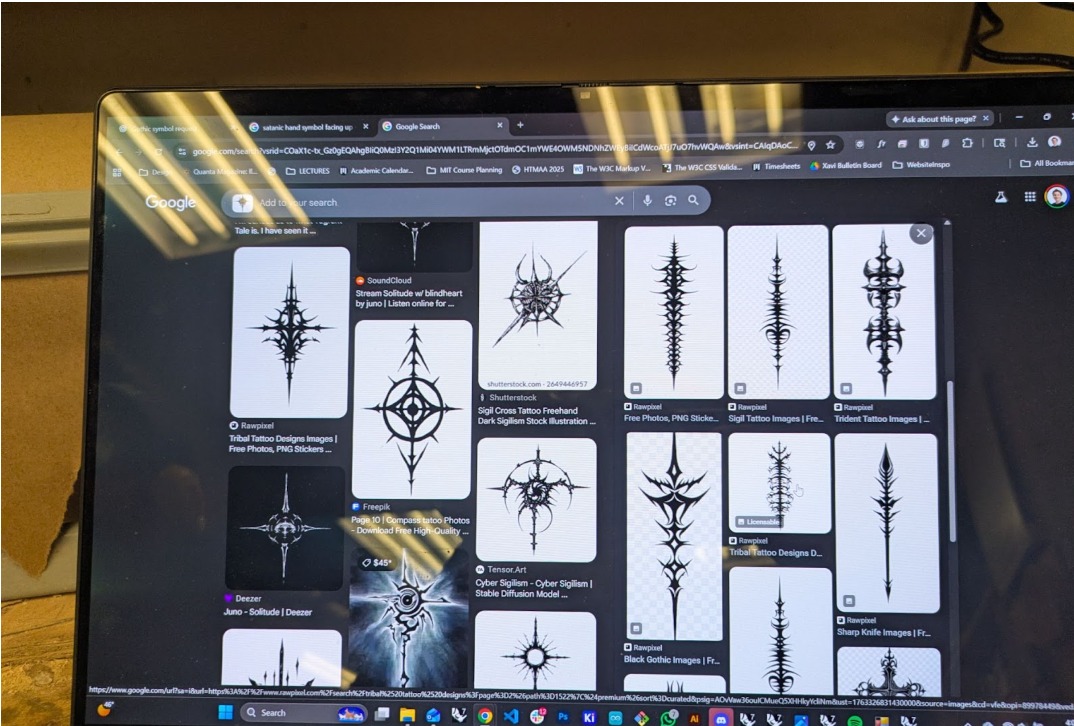
We discovered a very practical limitation: AI is notoriously bad at rendering clean alphabets (missing letters, duplicated letters, no “A”, etc.). So after generating style direction, we moved into Illustrator to rebuild the layout into editable, manufacturable vectors.
File Preparation Pipeline
This part was shockingly annoying (and absolutely the real work):
- Photoshop: isolate shapes from generated images
- Illustrator: Live Trace → Expand → clean paths + rebuild where needed
- Export vectors in a way Rhino could read reliably
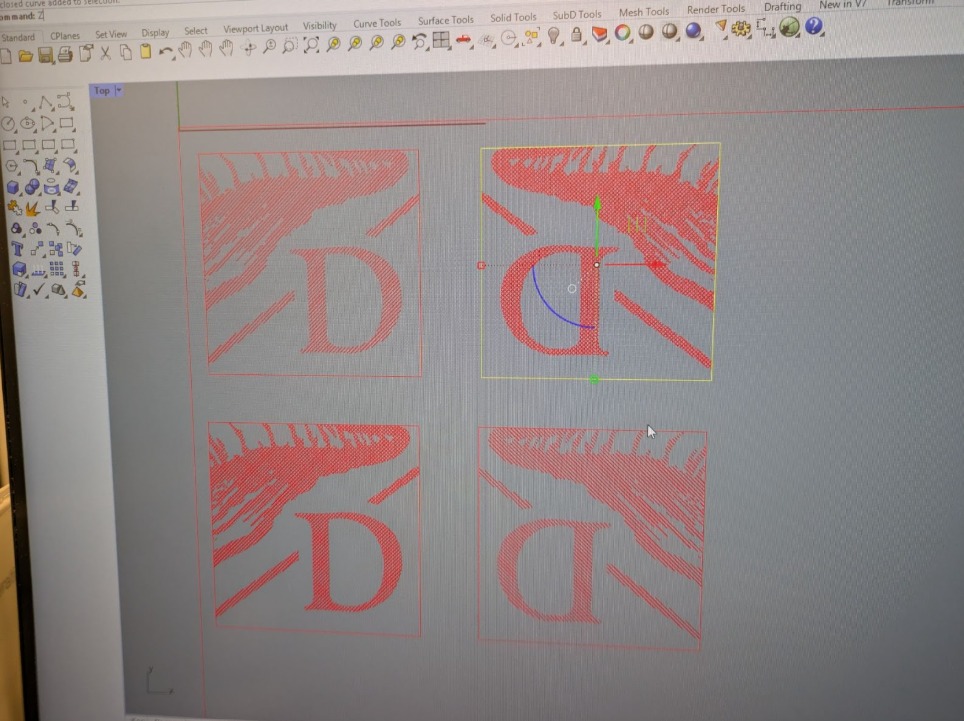
- Rhino: convert graphics into diagonal hatch geometry for laser etching
- Fix geometry issues: no self-intersections, no stray points, no overlapping boundaries
AI doesn’t generate manufacturable geometry — so in practice we rebuilt the board manually to make it laser-safe.
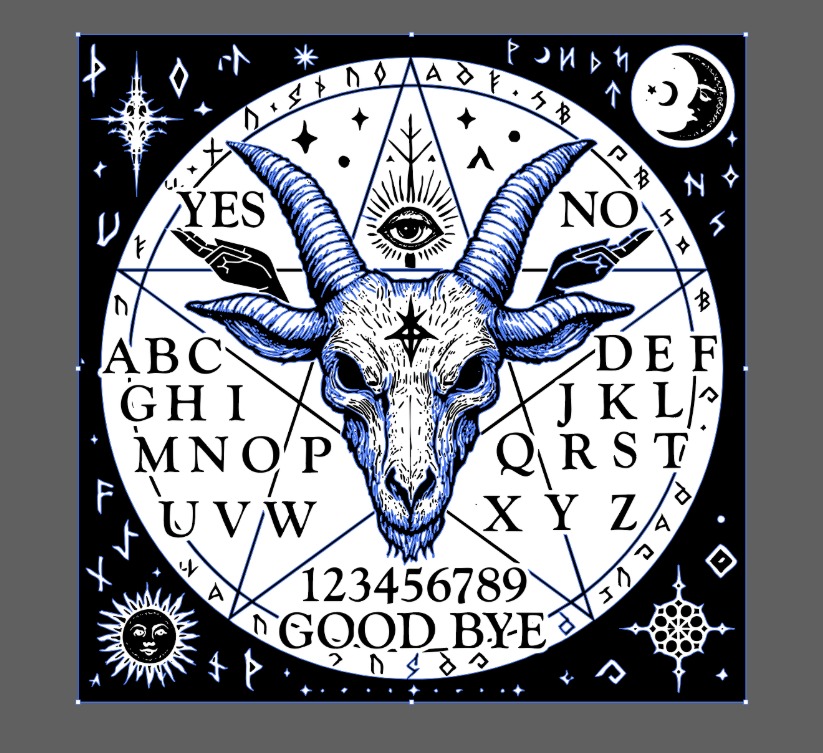
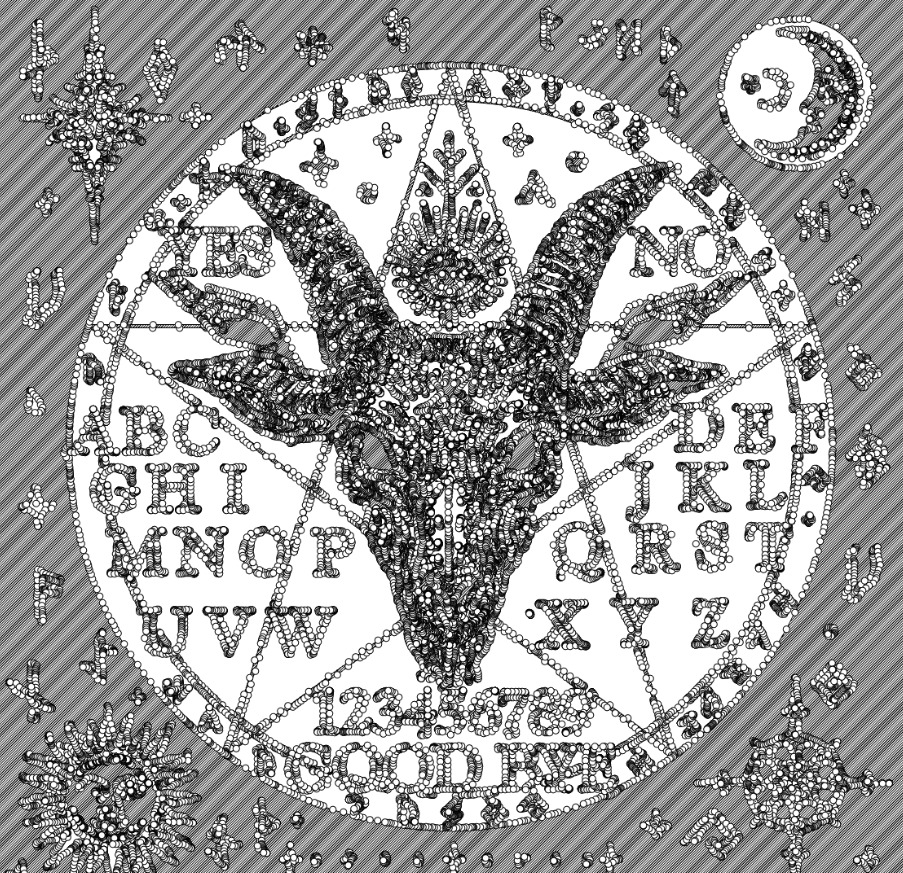
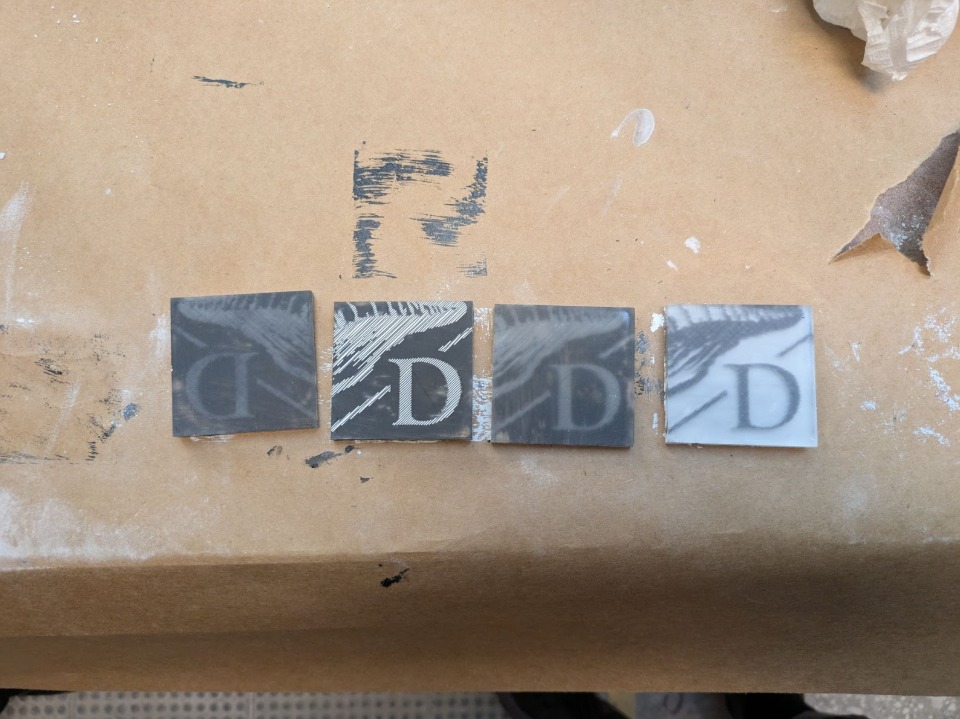
Material Testing
The board needed a slick top surface so the planchette would glide with minimal friction. That meant etching from the back, not the front. By divine intervention, Chris gifted us a sheet of 1/4" plexiglass (thanks, Chris).
We tested:
- front vs back etching
- back-painting vs front-painting
- white-on-black vs black-on-white
- sanding vs sandblasting
- paint-fill vs no fill
Our finalists were white graphics on black, or black graphics on white. We ultimately intended to go white-on-black… but I was exhausted, mixed up the order, and produced the inverse. It still looked legitimately spooky.
Final Production
After a long laser job, we produced the final board:
- Laser-etched from the back
- Etch filled with white paint + squeegeed
- Light sanding to remove residue
- Back-painted for opacity and contrast
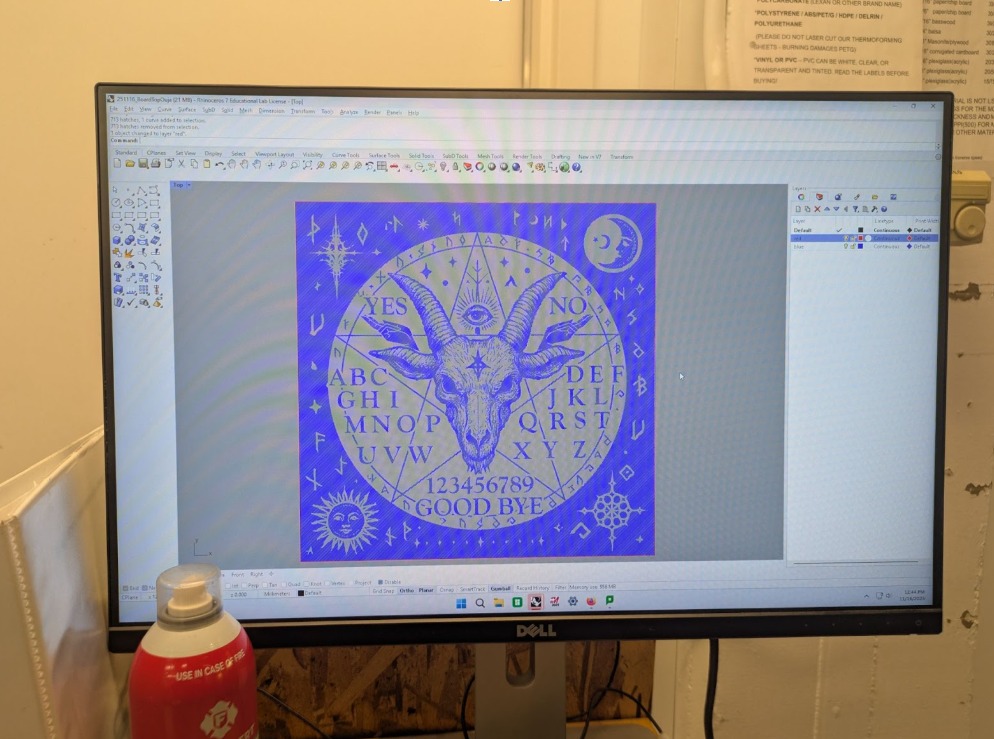
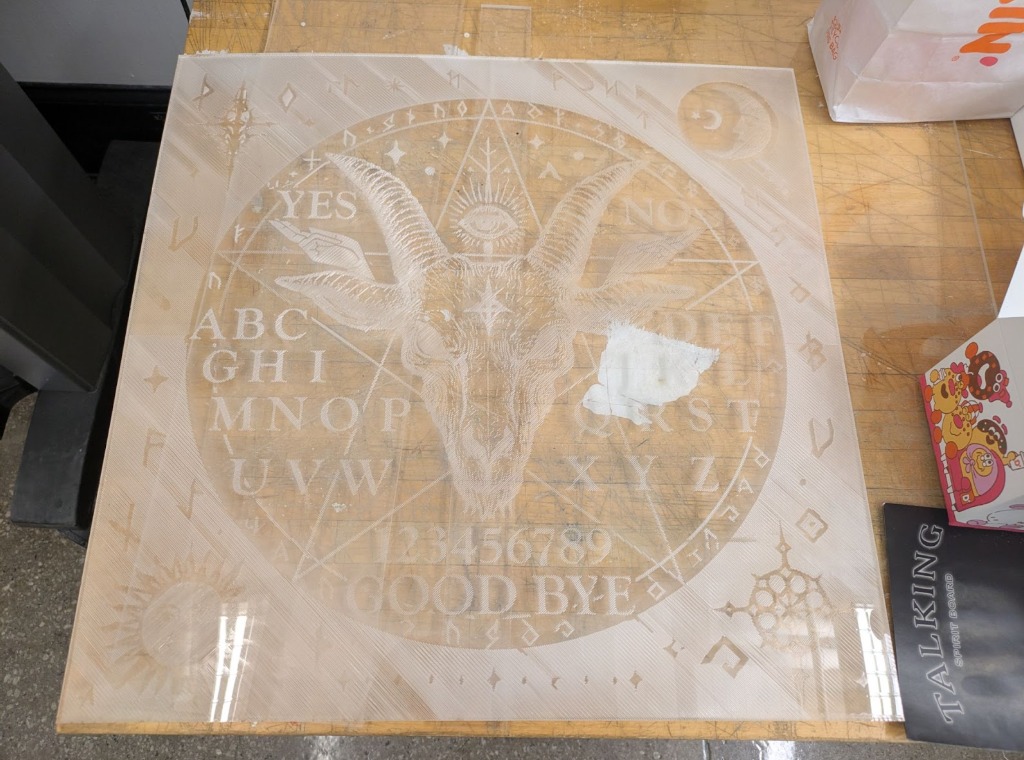
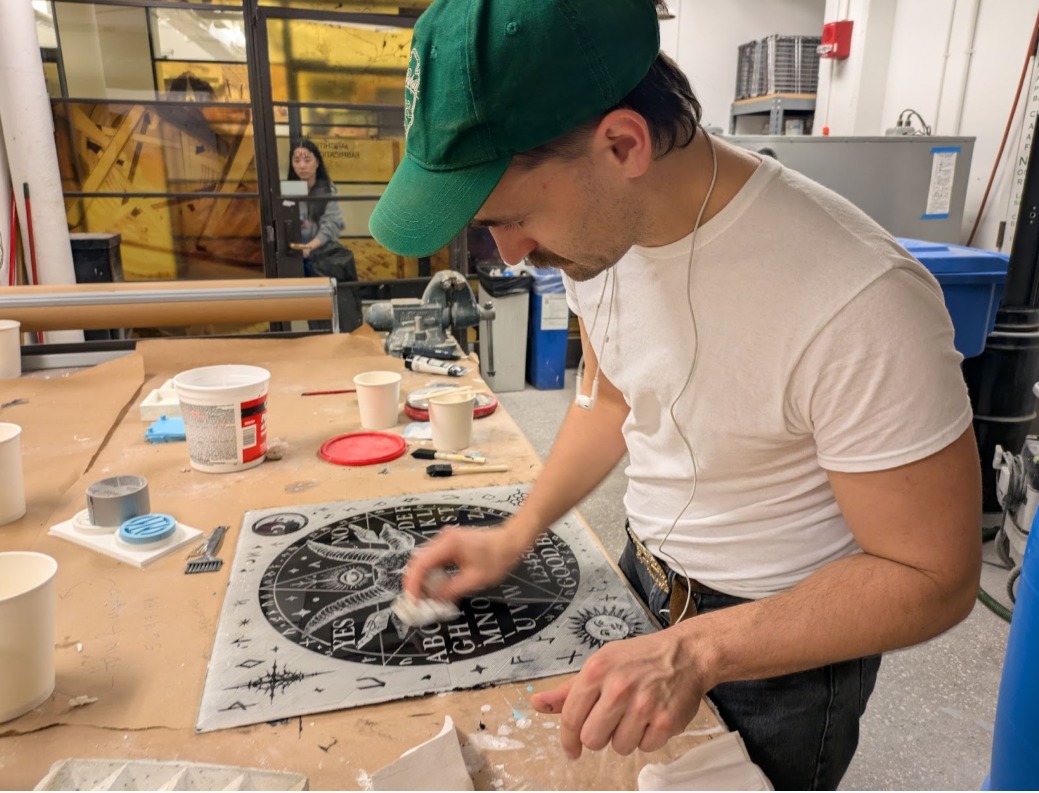
Table Team
Table Planning and Ideation
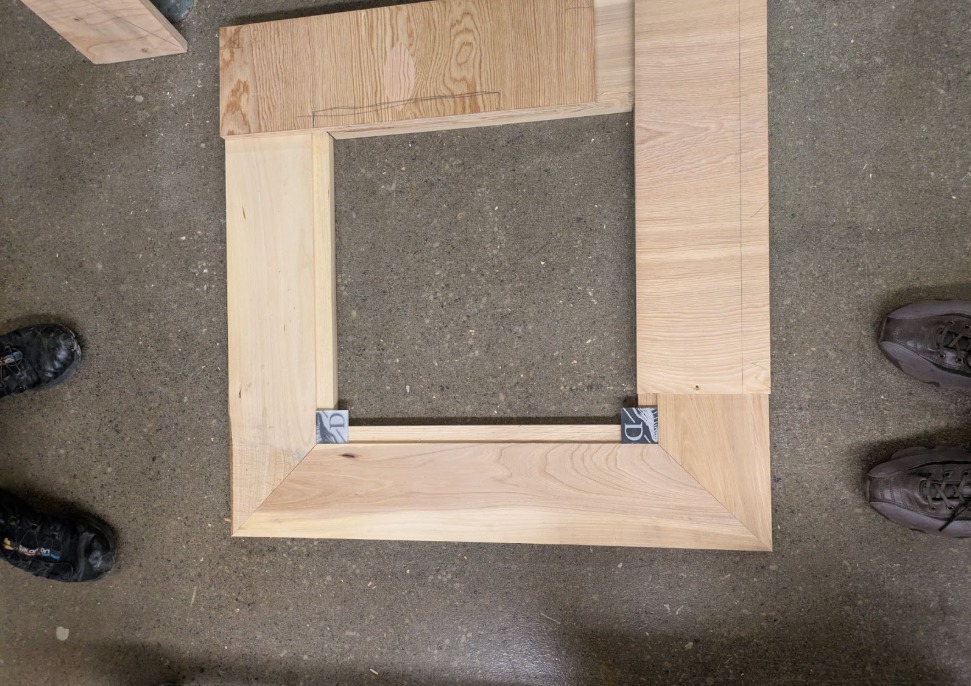
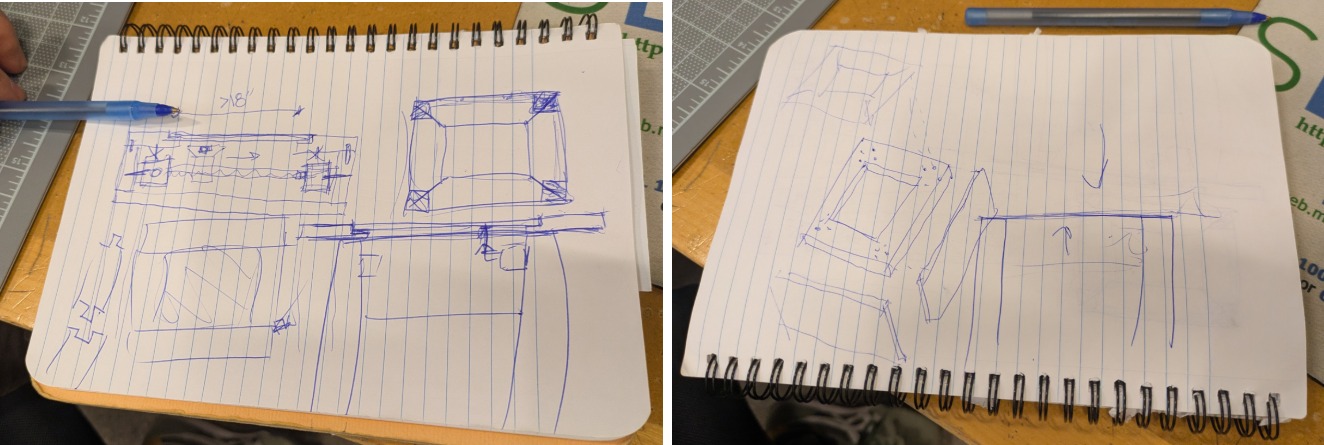
For carpentry, we consulted the oracle of N51: Jen. With limited time (and limited appetite for fancy joinery), we chose hidden screws and reliable construction.
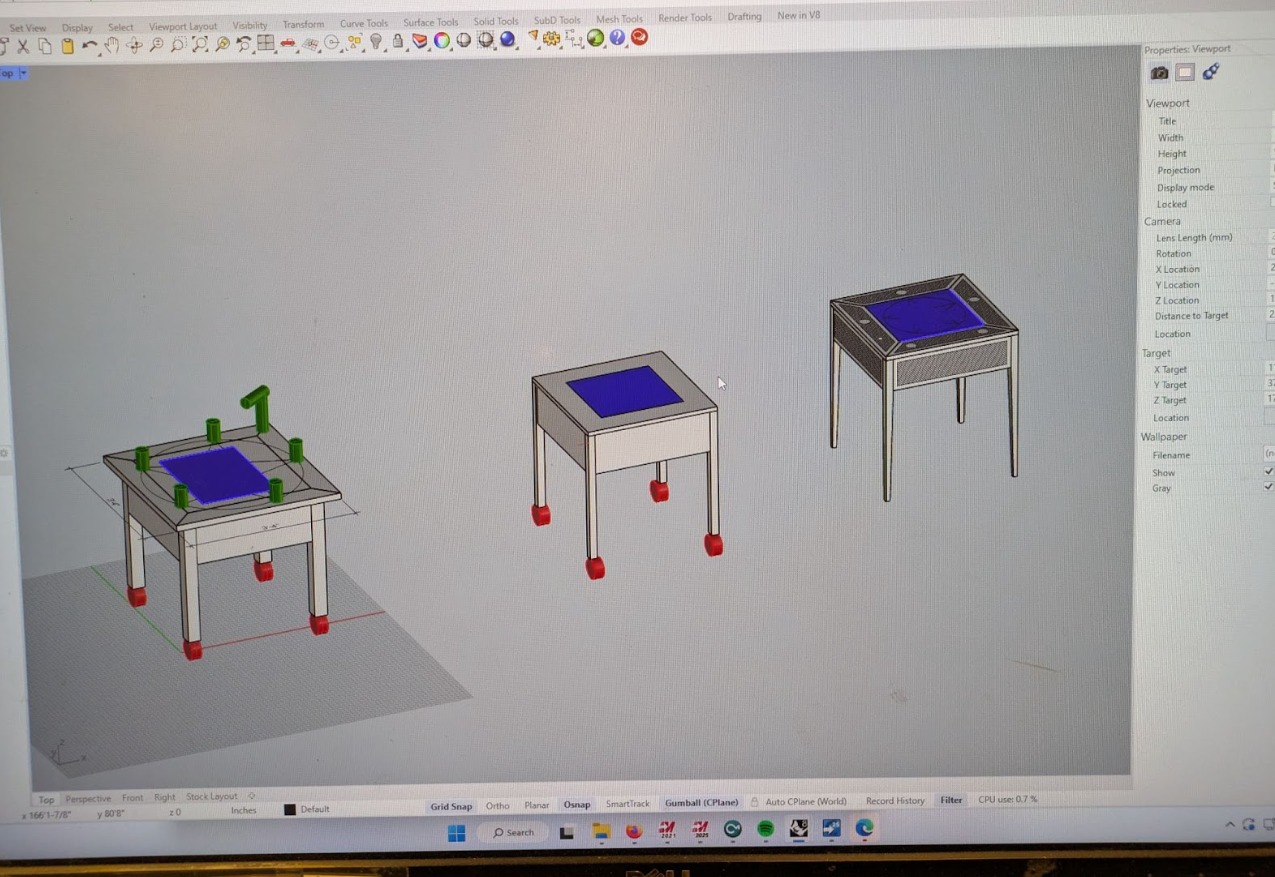
Because the table had to house a gantry being developed in parallel, we didn’t have a stable reference for a while. So we locked a strategy:
- CNC a standard mounting plate out of plywood
- Build the table around it
- Include a portal/opening for the end effector to “poke through”
Processing and Building
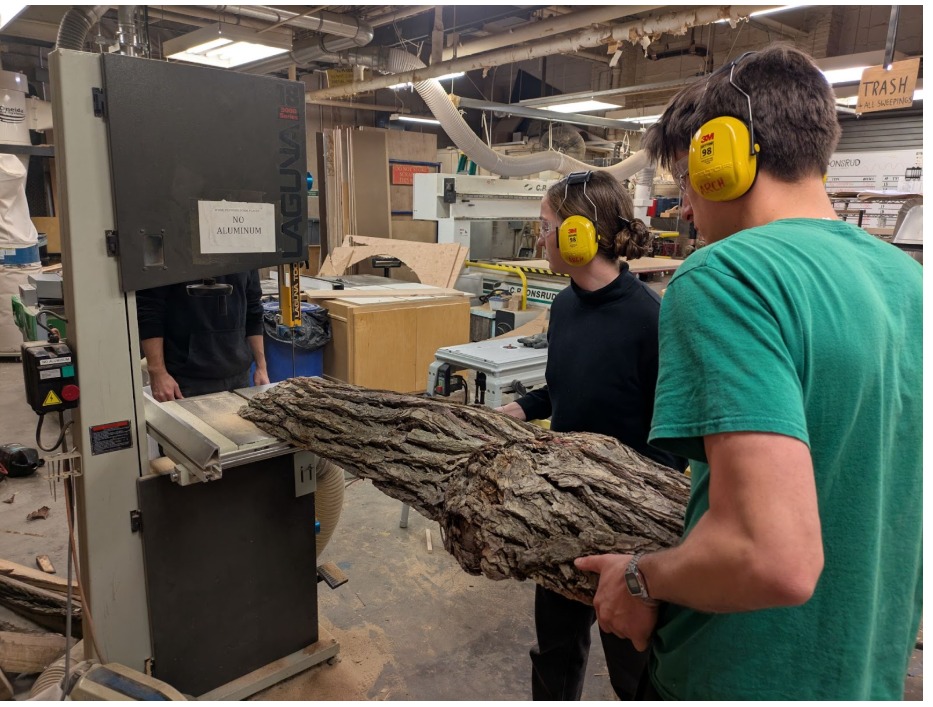
A tree recently died behind N52 and has been quietly furnishing the shop with free lumber. We continued the tradition: rough band-saw cuts, planed boards to consistent thickness, then cut/assembled/sanded the table for gantry integration.
- Visualizing assembly sequence
- Wood glue + clamping + overnight set
- Filling gaps with sawdust + glue (TLC pass)
- Finding and cutting blocking to support gantry mounting
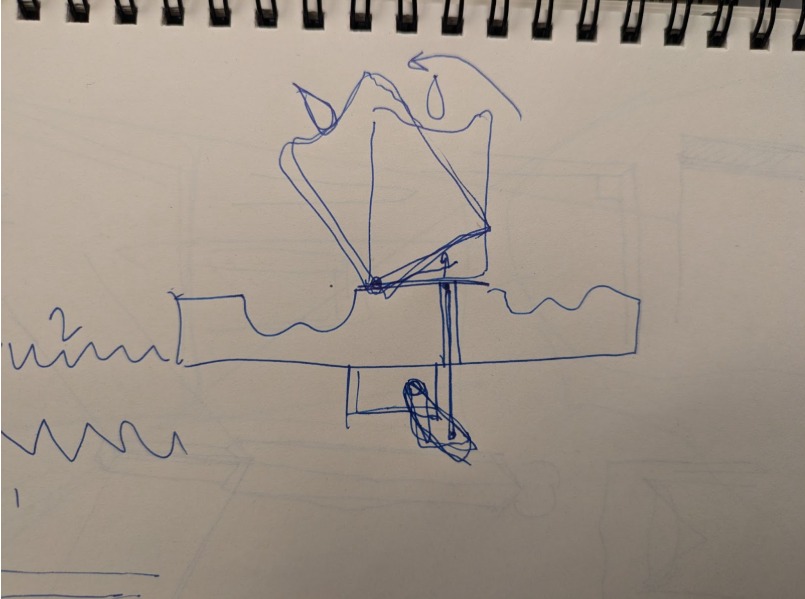
Candle holder concept I sketched out.
Mounting the Gantry
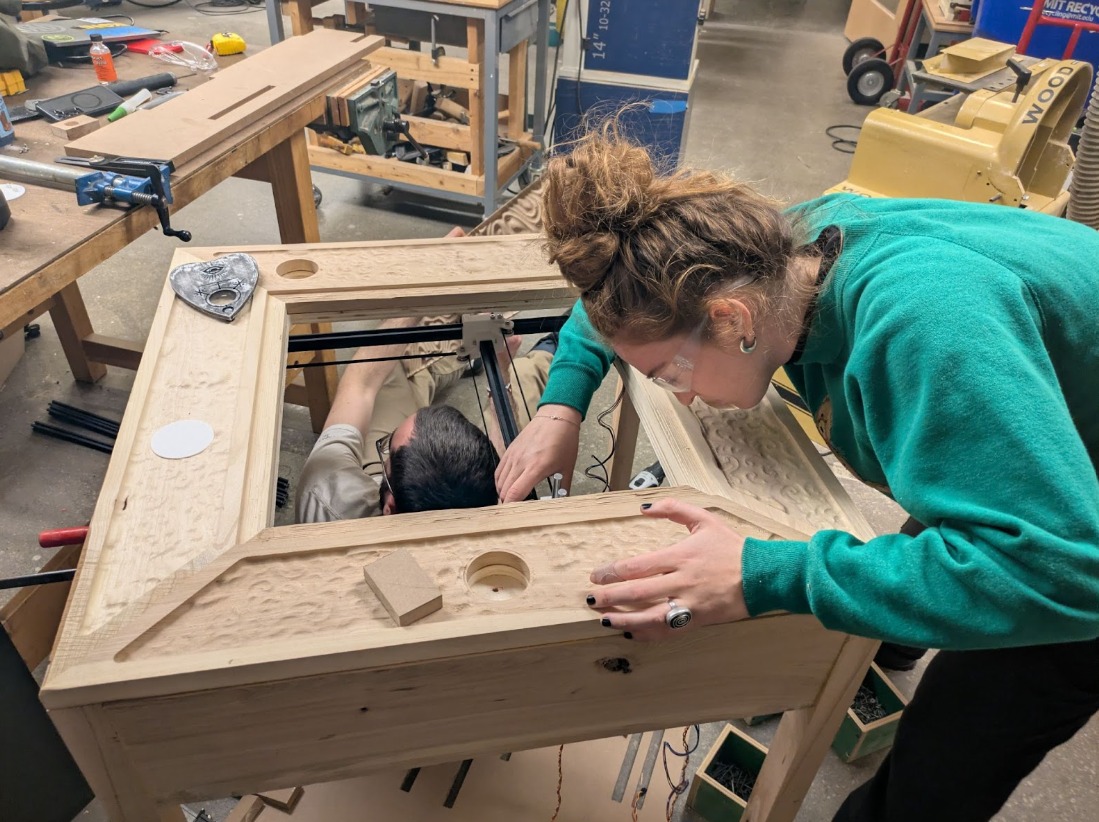
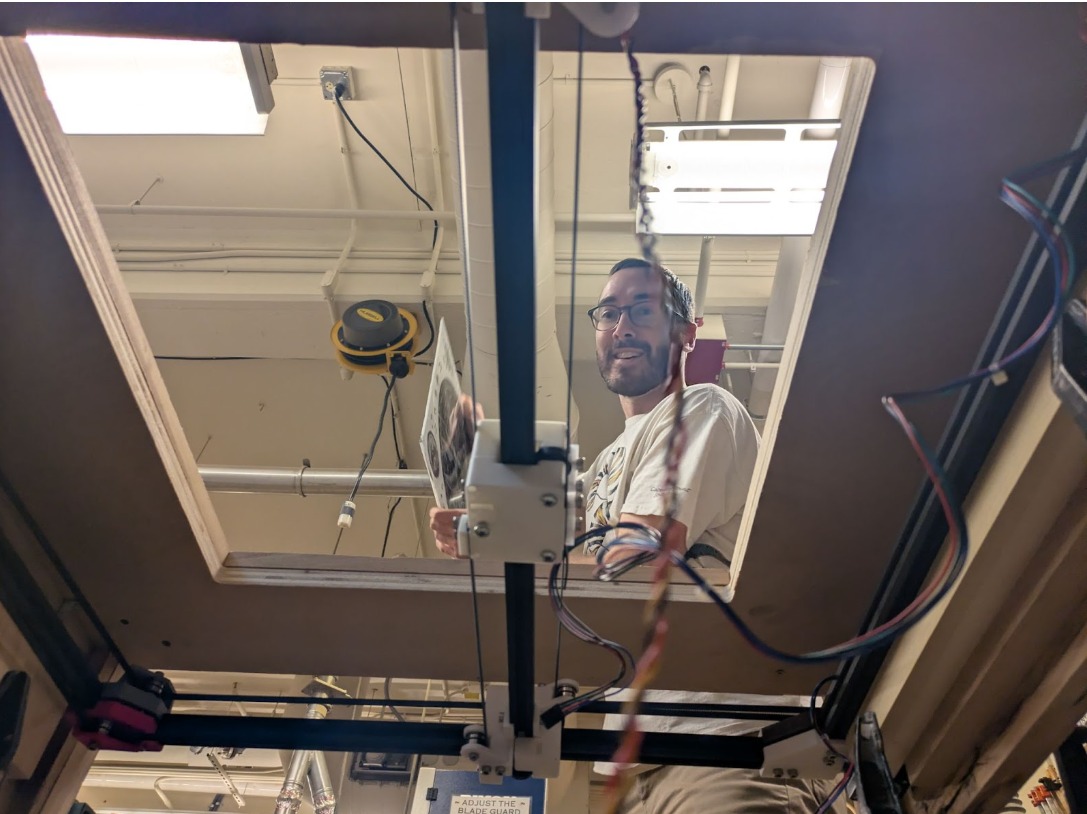
Mounting day was pure HTMAA energy: throw out over-engineering and do what works. We iteratively stacked and fastened scrapwood blocking until the extrusions landed at the right height and alignment. We cross-checked our as-builts against Rhino/Fusion models and adjusted until motion cleared the board and the portal.
Final Assembly & Results
Once the board, cursor/end effector, and table interfaces converged, the whole thing started to feel “effortless” — which was the goal. The most satisfying part was seeing the magic effect emerge from mundane realities: tolerances, friction, spacing, magnet coupling, and mounting.
Takeaways / Reflections
- Interfaces are everything: the board wasn’t “just graphics” but rather a low friction surface, a thickness constraint, and a reachable workspace for the gantry.
- AI is a sketch tool, not a fabrication tool: the real labor was rebuilding paths and making clean geometry for the laser.
- Carpentry as systems integration: the table was more than just furniture, it was the machine housing, alignment jig, and user experience.
- The “magic” feeling came from hiding complexity, which meant being ruthless about what had to be visible vs what had to work.
Shout Outs
- Avi for organizing teams + keeping dependencies moving.
- Jen for carpentry guidance and sanity checks on what’s buildable in the time we had.
- Ayah for concept leadership and pushing the graphic vibe to the right level of “spooky but designed.”